Monday, January 31, 2022

CAMEL


                                                                    "CAMEL"

A camel is an even-toed ungulate in the sort Camelus that bears particular greasy stores known as "bumps" on its back. Camels have for some time been tamed and, as animals, they give food (milk and meat) and materials (fiber and felt from hair). Camels are working creatures particularly fit to their desert territory and are a fundamental method for transport for travelers and freight. There are three enduring types of camel. The one-bumped dromedary makes up 94% of the world's camel populace, and the two-bumped Bactrian camel makes up 6%. The Wild Bactrian camel is a different animal types and is currently basically imperiled.


The word camel is likewise utilized casually from a more extensive perspective, where the more right term is "camelid", to incorporate every one of the seven types of the family Camelidae: the genuine camels (the over three species), alongside the "New World" camelids: the llama, the alpaca, the guanaco, and the vicuña.[6] The actual word is inferred through Latin: camelus and Greek: κάμηλος (kamēlos) from Hebrew, Arabic or Phoenician: gāmāl

1-Scientific classification.

Surviving species

3 species are extant:[9][10]


Image Common name Scientific name Distribution

2011 Trampeltier 1528.JPG Bactrian camel Camelus bactrianus Domesticated; Central Asia, including the verifiable district of Bactria.

Homegrown Dromedary Merzouga.jpg Dromedary/Arabian camel Camelus dromedarius Domesticated; the Middle East, Sahara Desert, and Afghanistan; acquainted with Australia

Wild Bactrian camel on street east of Yarkand.jpg Wild Bactrian camel Camelus ferus Remote areas of northwest China and Mongolia

Science

The normal future of a camel is 40 to 50 years.[11] A completely mature grown-up dromedary camel stands 1.85 m (6 ft 1 in) at the shoulder and 2.15 m (7 ft 1 in) at the hump.[12] Bactrian camels can be a foot taller. Camels can run at up to 65 km/h (40 mph) in short explodes and support rates of up to 40 km/h (25 mph).[13] Bactrian camels gauge 300 to 1,000 kg (660 to 2,200 lb) and dromedaries 300 to 600 kg (660 to 1,320 lb). The enlarging toes on a camel's foot give supplemental grasp to shifting soil sediments.[14]


The male dromedary camel has an organ called a dulla in its throat, an enormous, inflatable sac he expels from his mouth when in trench to state strength and draw in females. It looks like a since quite a while ago, enlarged, pink tongue hanging out of the side of its mouth.[15] Camels mate by having both male and female sitting on the ground, with the male mounting from behind.[16] The male ordinarily discharges three or multiple times inside a solitary mating session.[17] Camelids are the main ungulates to mate in a sitting position

2-Environmental and social variations.

Camels don't straightforwardly store water in their protuberances; they are supplies of greasy tissue. At the point when this tissue is used, it yields more than one gram of water for each gram of fat handled. This fat utilization, while delivering energy, makes water dissipate from the lungs during breath (as oxygen is needed for the metabolic cycle): by and large, there is a net abatement in water.[19][20]


A picture of a camel with a noticeably thick mane

A camel's thick coat is one of its numerous transformations that help it in desert-like conditions.

A restricted pack camel

A camel in Somalia, which has the world's biggest camel population.[21]

Camels have a progression of physiological variations that permit them to endure extensive stretches of time with no outside wellspring of water.[22] The dromedary camel can drink as sometimes as once like clockwork much under exceptionally hot conditions, and can lose up to 30% of its weight due to dehydration.[23] Unlike different vertebrates, camels' red platelets are oval rather than round in shape. This works with the progression of red platelets during dehydration[24] and improves them at enduring high osmotic variety without cracking when drinking a lot of water: a 600 kg (1,300 lb) camel can drink 200 L (53 US lady) of water in three minutes.[25][26]


Camels can endure changes in internal heat level and water utilization that would kill most different well evolved creatures. Their temperature goes from 34 °C (93 °F) at sunrise and consistently increments to 40 °C (104 °F) by nightfall, before they cool off around evening time again.[22] as a rule, to look at among camels and the other animals, camels lose just 1.3 liters of liquid admission consistently while the other domesticated animals lose 20 to 40 liters each day (Breulmann, et al., 2007).[27] Maintaining the mind temperature inside specific cutoff points is basic for creatures; to help this, camels have a rete mirabile, a complex of conduits and veins lying exceptionally near one another which uses countercurrent blood stream to cool blood streaming to the brain.[28] Camels seldom sweat, in any event, when surrounding temperatures reach 49 °C (120 °F).[29] Any perspiration that happens dissipates at the skin level rather than at the outer layer of their jacket; the fieriness of vaporization consequently comes from body heat rather than encompassing hotness. Camels can endure losing 25% of their body weight in water, though most different vertebrates can endure around 12-14% parchedness before heart disappointment results from circulatory disturbance.[26]


At the point when the camel breathes out, water fume becomes caught in their noses and is reabsorbed into the body as a way to monitor water.[30] Camels eating green herbage can ingest adequate dampness in milder conditions to keep up with their bodies' hydrated state without the requirement for drinking.[31]


Trained camel calves lying in sternal supineness, a place that helps heat misfortune

The camel's thick coat protects it from the extreme hotness transmitted from desert sand; a shorn camel should perspire half more to keep away from overheating.[32] During the mid year the coat becomes lighter in shading, mirroring light just as keeping away from sunburn.[26] The camel's long legs help by keeping its body farther starting from the earliest stage, can warm up to 70 °C (158 °F).[33][34] Dromedaries have a stack of thick tissue over the sternum called the platform. At the point when the creature rests in a sternal prostrate position, the platform raises the body from the hot surface and permits cooling air to pass under the body.[28]


Camels' mouths have a thick rough coating, permitting them to bite prickly desert plants. Long eyelashes and ear hairs, along with nostrils that can close, structure a hindrance against sand. Assuming sand gets held up in their eyes, they can remove it utilizing their straightforward third eyelid. The camels' step and extended feet assist them with moving without sinking into the sand.[33][35][36]


The kidneys and digestive organs of a camel are exceptionally proficient at reabsorbing water. Camels' kidneys have a 1:4 cortex to medulla ratio.[37] Thus, the medullary piece of a camel's kidney involves two times as much region as a cow's kidney. Furthermore, renal corpuscles have a more modest width, which lessens surface region for filtration. These two significant physical qualities empower camels to save water and breaking point the volume of pee in outrageous desert conditions.[38] Camel pee emerges as a thick syrup, and camel defecation are dry that they don't need drying when the Bedouins use them to fuel fires.[39][40][41][42]


The camel resistant framework varies from those of different vertebrates. Ordinarily, the Y-formed neutralizer atoms comprise of two weighty (or long) chains along the length of the Y, and two light (or short) chains at each tip of the Y. Camels, what's more, additionally have antibodies made of just two weighty chains, an attribute that makes them more modest and more sturdy. These "weighty chain-as it were" antibodies, found in 1993, are remembered to have created 50 million years prior, after camelids split from ruminants and pigs.[43] Camels experience the ill effects of surra brought about by Trypanosoma evansi any place camels are trained in the world,[44] and resultantly camels have developed trypanolytic antibodies similarly as with numerous warm blooded creatures. Later on, nanobody/single-area immunizer treatment will outperform regular camel antibodies by arriving at areas as of now inaccessible because of normal antibodies' bigger size. Such treatments may likewise be reasonable for different vertebrates

3-Hereditary qualities.

The karyotypes of various camelid species have been concentrated before by numerous groups,[46][47][48][49][50][51] yet no settlement on chromosome classification of camelids has been reached. A recent report stream arranged camel chromosomes, expanding on the way that camels have 37 sets of chromosomes (2n=74), and observed that the karyotype comprised of one metacentric, three submetacentric, and 32 acrocentric autosomes. The Y is a little metacentric chromosome, while the X is a huge metacentric chromosome.[52]


Skull of a F1 half and half camel, Museum of Osteology, Oklahoma

The half and half camel, a crossover among Bactrian and dromedary camels, has one protuberance, however it has a space 4-12 cm (1.6-4.7 in) profound that separates the front from the back. The cross breed is 2.15 m (7 ft 1 in) at the shoulder and 2.32 m (7 ft 7 in) tall at the protuberance. It gauges a normal of 650 kg (1,430 lb) and can haul around 400 to 450 kg (880 to 990 lb), which is more than either the dromedary or Bactrian can.[53]


As per sub-atomic information, the wild Bactrian camel (C. ferus) isolated from the homegrown Bactrian camel (C. bactrianus) around 1 million years ago.[54][55] New World and Old World camelids wandered around 11 million years ago.[56] disregarding this, these species can hybridize and deliver suitable offspring.[57] The cama is a camel-llama cross breed reproduced by researchers to perceive how firmly related the parent species are.[58] Scientists gathered semen from a camel through a counterfeit vagina and inseminated a llama subsequent to animating ovulation with gonadotrophin injections.[59] The cama is mostly in size between a camel and a llama and misses the mark on bump. It has ears middle between those of camels and llamas, longer legs than the llama, and somewhat cloven hooves.[60][61] Like the donkey, camas are sterile, in spite of the two guardians having similar number of chromosomes

4-Advancement.

The earliest known camel, called Protylopus, lived in North America 40 to 50 million years prior (during the Eocene).[17] It was about the size of a bunny and lived in the open forests of what is presently South Dakota.[62][63] By 35 million years prior, the Poebrotherium was the size of a goat and had a lot more qualities like camels and llamas.[64][65] The hoofed Stenomylus, which strolled on the tips of its toes, likewise existed around this time, and the since quite a while ago necked Aepycamelus advanced in the Miocene.[66]


The predecessor of present day camels, Paracamelus, relocated into Eurasia from North America by means of Beringia during the late Miocene, somewhere in the range of 7.5 and 6.5 million years ago.[67][68][69] During the Pleistocene, around 3 to 1 million years prior, the North American Camelidae spread to South America as a component of the Great American Interchange through the recently framed Isthmus of Panama, where they led to guanacos and related animals.[17][62][63] Populations of Paracamelus kept on existing in the North American Arctic into the Late Pleistocene.[70][71] This animal is assessed to have waited around nine feet (2.7 meters) tall. The Bactrian camel separated from the dromedary around 1 million years prior, as indicated by the fossil record.[72]


The last camel local to North America was Camelops hesternus, which disappeared alongside ponies, short-confronted bears, mammoths and mastodons, ground sloths, sabertooth felines, and numerous other megafauna, harmonizing with the relocation of people from Asia toward the finish of the Pleistocene, around 15-11,000 years prior

5-Training.


A camel conveying supplies, Tang line


A man on a camel, Tang line


Lady breastfeeding on a camel, Tang line

Like ponies, camels began in North America and in the end spread across Beringia to Asia. They made due in the Old World, and in the long run people trained them and spread them internationally. Alongside numerous other megafauna in North America, the first wild camels were cleared out during the spread of the initial native people groups of the Americas from Asia into North America, 10 to 12,000 years prior; despite the fact that fossils have never been related with conclusive proof of hunting.[73][74]


Most camels enduring today are domesticated.[42][75] Although wild populaces exist in Australia, India and Kazakhstan, wild camels endure just in the wild Bactrian camel populace of the Gobi Desert

Saturday, January 29, 2022

ELEPHANT


"ELEPHANT" 

1-Derivation.

"Elephant" depends on the Latin elephas (genitive elephantis) ("elephant"), which is the Latinised type of the Greek ἐλέφας (elephas) (genitive ἐλέφαντος (elephantos[1]), presumably from a non-Indo-European language, logical Phoenician.[2] It is validated in Mycenaean Greek as e-re-dad (genitive e-re-dad to) in Linear B syllabic script.[3][4] As in Mycenaean Greek, Homer utilized the Greek word to mean ivory, however after the hour of Herodotus, it additionally alluded to the animal.[1] "elephant" shows up in Middle English as olyfaunt (c.1300) and was acquired from Old French oliphant (twelfth century)

2-Scientific classification and phylogeny.

Elephants have a place with the family Elephantidae, the sole excess family inside the request Proboscidea which has a place with the superorder Afrotheria. Their nearest surviving family members are the sirenians (dugongs and manatees) and the hyraxes, with which they share the clade Paenungulata inside the superorder Afrotheria.[8] Elephants and sirenians are additionally gathered in the clade Tethytheria.[9]


Three types of elephants are perceived; the African hedge elephant (Loxodonta africana) and woods elephant (Loxodonta cyclotis) of sub-Saharan Africa, and the Asian elephant (Elephas maximus) of South and Southeast Asia.[10] African elephants have bigger ears, an inward back, more creased skin, an inclining midsection, and two finger-like augmentations at the tip of the storage compartment. Asian elephants have more modest ears, a raised or level back, smoother skin, an even mid-region that at times droops in the center and one augmentation at the tip of the storage compartment. The circled edges on the molars are smaller in the Asian elephant while those of the African are more jewel molded. The Asian elephant additionally has dorsal knocks on its head and a few patches of depigmentation on its skin.[11]


Among African elephants, woodland elephants have more modest and more adjusted ears and more slender and straighter tusks than shrub elephants and are restricted in reach to the forested areas of western and Central Africa.[12] Both were customarily viewed as a solitary animal groups, Loxodonta africana, however atomic investigations have certified their status as isolated species.[13][14][15] In 2017, DNA succession examination showed that L. cyclotis is all the more firmly connected with the wiped out Palaeoloxodon antiquus, than it is to L. africana, conceivably sabotaging the class Loxodonta as a whole.[16]

3-Life structures and morphology.

Size


African shrubbery elephant skeleton

Elephants are the biggest living earthbound creatures. African shrubbery elephants are the biggest species, with guys being 304-336 cm (10 ft 0 in-11 ft 0 in) tall at the shoulder with a weight of 5.2-6.9 t (5.7-7.6 short tons) and females standing 247-273 cm (8 ft 1 in-8 ft 11 in) tall at the shoulder with a weight of 2.6-3.5 t (2.9-3.9 short tons). Male Asian elephants are typically around 261-289 cm (8 ft 7 in-9 ft 6 in) tall at the shoulder and 3.5-4.6 t (3.9-5.1 short tons) though females are 228-252 cm (7 ft 6 in-8 ft 3 in) tall at the shoulder and 2.3-3.1 t (2.5-3.4 short tons). African timberland elephants are the littlest species, with guys for the most part being around 209-231 cm (6 ft 10 in-7 ft 7 in) tall at the shoulder and 1.7-2.3 t (1.9-2.5 short tons). Male African shrub elephants are regularly 23% taller than females, though male Asian elephants are just around 15% taller than females.[25]


Bones

The skeleton of the elephant is comprised of 326-351 bones.[34] The vertebrae are associated by close joints, which limit the spine's adaptability. African elephants have 21 sets of ribs, while Asian elephants have 19 or 20 pairs.[35]


Head

An elephant's skull is sufficiently strong to endure the powers created by the influence of the tusks and straight on impacts. The rear of the skull is leveled and fanned out, making curves that secure the mind in each direction.[36] The skull contains air pits (sinuses) that lessen the heaviness of the skull while keeping up with by and large strength. These depressions give within the skull a honeycomb-like appearance. The noggin is especially enormous and gives sufficient space to the connection of muscles to help the whole head. The lower jaw is strong and heavy.[34] Because of the size of the head, the neck is generally short to give better support.[6] Lacking a lacrimal device, the eye depends on the harderian organ to keep it wet. A sturdy nictitating layer secures the eye globe. The creature's field of vision is undermined by the area and restricted portability of the eyes.[37] Elephants are considered dichromats[38] and they can see well in faint light yet not in brilliant light.[39]


African shrubbery elephant with ears spread in a danger or mindful position; note the noticeable veins

Ears

Elephant ears have thick bases with slim tips. The ear folds, or pinnae, contain various veins called vessels. Warm blood streams into the vessels, assisting with delivering overabundance body heat into the climate. This happens when the pinnae are still, and the creature can improve the impact by fluttering them. Bigger ear surfaces contain more vessels, and more hotness can be delivered. Of the multitude of elephants, African hedge elephants live in the most sizzling environments, and have the biggest ear flaps.[40] Elephants are equipped for hearing at low frequencies and are generally delicate at 1 kHz (in nearness to the Soprano C).[41]


Trunk


African hedge elephant with its trunk raised, a conduct frequently embraced while trumpeting


Asian elephant drinking water with trunk

The storage compartment, or proboscis, is a combination of the nose and upper lip, albeit in early fetal life, the upper lip and trunk are separated.[6] The storage compartment is prolonged and concentrated to turn into the elephant's generally significant and adaptable member. It contains up to 150,000 separate muscle fascicles,[42] with no bone and minimal fat. These combined muscles comprise of two significant sorts: shallow (surface) and inner. The previous are separated into dorsals, ventrals, and laterals while the last option are partitioned into cross over and transmitting muscles. The muscles of the storage compartment interface with a hard opening in the skull. The nasal septum is made out of small muscle units that stretch evenly between the nostrils. Ligament partitions the nostrils at the base.[43] As a solid hydrostat, the storage compartment moves by definitively planned muscle compressions. The muscles work both with and against one another. A remarkable proboscis nerve - shaped by the maxillary and facial nerves - runs along the two sides of the trunk.[44]


Elephant trunks have different capacities, including breathing, olfaction, contacting, getting a handle on, and sound production.[6] The creature's feeling of smell might be multiple times actually that touchy of a bloodhound.[45] The storage compartment's capacity to make strong curving and curling developments permits it to gather food, grapple with other elephants,[46] and lift up to 350 kg (770 lb).[6] It can be utilized for fragile undertakings, for example, cleaning an eye and checking an orifice,[46] and is equipped for breaking a nut shell without breaking the seed.[6] With its trunk, an elephant can arrive at things at statures of up to 7 m (23 ft) and burrow for water under mud or sand.[46] Individuals might show horizontal inclination when getting a handle on with their trunks: some really like to bend them to one side, others to the right.[44] Elephants are fit for widening their noses at a span of almost 30%, expanding the nasal volume by 64%, and can breathe in at more than 150 m/s (490 ft/s) which is multiple times the speed of a human sneeze.[47] Elephants can suck up food and water both to splash in the mouth and, on account of the later, to sprinkle on their bodies.[6][47] A grown-up Asian elephant is fit for holding 8.5 L (2.2 US lady) of water in its trunk.[43] They will likewise shower residue or grass on themselves.[6] When submerged, the elephant involves its trunk as a snorkel.[32]


The African elephant has two finger-like expansions at the tip of the storage compartment that permit it to get a handle on and carry food to its mouth. The Asian elephant has just one and depends more on folding over a food thing and getting it into its mouth.[11] Asian elephants have more muscle practical dexterity and can perform more mind boggling tasks.[43] Losing the storage compartment would be impeding to an elephant's survival,[6] albeit in interesting cases, people have made due with abbreviated ones. One elephant has been seen to nibble by bowing on its front legs, raising on its rear legs and taking in grass with its lips.[43] Floppy trunk disorder is a state of trunk loss of motion in African shrubbery elephants brought about by the debasement of the fringe nerves and muscles starting at the tip.[48]


Teeth


Closeup of the cheek teeth of a dead adolescent bramble elephant


Asian elephant eating tree rind, utilizing its tusks to strip it off.

Elephants for the most part have 26 teeth: the incisors, known as the tusks, 12 deciduous premolars, and 12 molars. Not at all like most vertebrates, which develop child teeth and afterward supplant them with a solitary super durable arrangement of grown-up teeth, elephants are polyphyodonts that have patterns of tooth turn all through their lives. The biting teeth are supplanted multiple times in a run of the mill elephant's lifetime. Teeth are not supplanted by new ones rising up out of the jaws upward as in many vertebrates. All things considered, new teeth fill in at the rear of the mouth and push ahead to push out the old ones. The principal biting tooth on each side of the jaw drops out when the elephant is a few years of age. The second arrangement of biting teeth drops out at four to six years of age. The third set drops out at 9-15 years old and set four goes on until 18-28 years old. The fifth arrangement of teeth drops out at the mid 40s. The 6th (and normally last) set should last the elephant the remainder of its life. Elephant teeth have circle molded dental edges, which are thicker and more jewel formed in African elephants.[49]


Tusks

The tusks of an elephant are adjusted second incisors in the upper jaw. They supplant deciduous milk teeth at 6 a year old enough and develop ceaselessly at around 17 cm (7 in) a year. A recently evolved tusk has a smooth finish cap that in the long run wears off. The dentine is known as ivory and its cross-segment comprises of confusing line designs, known as "motor turning", which make jewel molded regions. As a piece of living tissue, a tusk is generally delicate; it is just about as hard as the mineral calcite. A significant part of the tusk should be visible outside; the rest is in an attachment in the skull. Something like 33% of the tusk contains the mash and some have nerves extending to the tip. In this manner it would be hard to eliminate it without hurting the creature. When eliminated, ivory starts to evaporate and break on the off chance that not kept cool and clammy. Tusks fill different needs. They are utilized for burrowing for water, salt, and roots; debarking or checking trees; and for moving trees and branches when making a way. When battling, they are utilized to assault and shield, and to ensure the trunk.[50]


Like people, who are commonly correct or left-gave, elephants are typically correct or left-tusked. The predominant tusk, called the expert tusk, is for the most part more worn out, as it is more limited with a rounder tip. For the African elephants, tusks are available in the two guys and females, and are around similar length in the two genders, coming to up to 300 cm (9 ft 10 in),[50] yet those of guys will quite often be thicker.[51] In prior times, elephant tusks weighing north of 200 pounds (in excess of 90 kg) were normal, however it is interesting today to see any more than 100 pounds (45 kg).[52]


In the Asian species, just the guys have huge tusks. Female Asians have tiny tusks, or none at all.[50] Tuskless guys exist and are especially normal among Sri Lankan elephants.[53] Asian guys can have tusks as long as Africans', yet they are generally slimmer and lighter; the biggest recorded was 302 cm (9 ft 11 in) long and weighed 39 kg (86 lb). Chasing after elephant ivory in Africa[54] and Asia[55] has prompted regular choice for more limited tusks[56][57] and tusklessness.[58][59]


Skin


An African backwoods elephant covering its skin with mud

An elephant's skin is by and large extremely intense, at 2.5 cm (1 in) thick on the back and portions of the head. The skin around the mouth, rear-end, and within the ear is significantly more slender. Elephants ordinarily have dim skin, however African elephants look brown or ruddy subsequent to floundering in shaded mud. Asian

4-Sexual conduct.

Musth

Primary article: Musth


Bull in musth

Grown-up guys enter a condition of expanded testosterone known as musth. In a populace in southern India, guys initially enter musth at 15 years old, yet it isn't exceptionally extreme until they are more seasoned than 25. At Amboseli, bulls under 24 don't go into musth, while half of those matured 25-35 and every one of those more than 35 do. Youthful bulls seem to enter musth during the dry season (January-May), while more established bulls go through it during the wet season (June-December). The fundamental trait of a bull's musth is a liquid discharged from the worldly organ that runs down the side of his face. He might pee with his penis still in his sheath, which makes the pee splash on his rear legs. Practices related with musth incorporate strolling with the head held high and swinging, picking at the ground with the tusks, stamping, thundering and waving just a single ear at a time. This can endure from a day to four months.[108]


Guys become amazingly forceful during musth. Size is the deciding variable in agonistic experiences when the people have a similar condition. In challenges among musth and non-musth people, musth bulls win most of the time, in any event, when the non-musth bull is bigger. A male might quit giving indications of musth when he experiences a musth male of higher position. Those of equivalent position will quite often stay away from one another. Agonistic experiences commonly comprise of danger presentations, pursues, and minor fighting with the tusks. Genuine battles are rare.[108]


Mating


Bull mating with an individual from a female gathering

Elephants are polygynous breeders,[109] and lovemakings are generally successive during the pinnacle of the wet season.[110] A cow in oestrus discharges synthetic signs (pheromones) in her pee and vaginal emissions to flag her availability to mate. A bull will follow a possible mate and survey her condition with the flehmen reaction, which requires the male to gather a synthetic example with his trunk and carry it to the vomeronasal organ.[111] The oestrous pattern of a cow endures 14-16 weeks with a 4-6-week follicular stage and a 8-to 10-week luteal stage. While most warm blooded animals have one flood of luteinizing chemical during the follicular stage, elephants have two. The first (or anovulatory) flood, could motion toward guys that the female is in oestrus by changing her fragrance, however ovulation doesn't happen until the second (or ovulatory) surge.[112] Fertility rates in cows decay around 45-50 years of age.[101]


Bulls participate in a conduct known as mate-watching, where they follow oestrous females and safeguard them from other males.[113] Most mate-protecting is finished by musth guys, and females effectively look to be monitored by them, especially more established ones.[114] Thus these bulls have more regenerative success.[105] Musth seems to motion toward females the state of the male, as frail or harmed guys don't have ordinary musths.[115] For youthful females, the methodology of a more seasoned bull can be scary, so her family members stay close by to offer help and reassurance.[116] During intercourse, the male lays his trunk over the female's back.[117] The penis is exceptionally versatile, having the option to move autonomously of the pelvis.[118] Prior to mounting, it bends forward and up. Sexual intercourse goes on around 45 seconds and doesn't include pelvic pushing or ejaculatory pause.[119] Elephant sperm should swim near 2 m (6.6 ft) to arrive at the egg. By examination, human sperm needs to swim around just 76.2 mm (3.00 in).[120]


Gay conduct is regular in the two genders. As in hetero communications, this includes mounting. Male elephants in some cases invigorate each other by playfighting and "titles" may frame between old bulls and more youthful guys. Female same-sex practices have been archived uniquely in imprisonment where they are known to jerk off each other with their trunks.[121]

5-Birth and advancement.

An African timberland elephant mother washing with her calf

Incubation in elephants ordinarily goes on around two years with interbirth stretches typically enduring four to five years. Births will generally happen during the wet season.[122] Calves are conceived 85 cm (33 in) tall and weigh around 120 kg (260 lb).[116] Typically, just a solitary youthful is conceived, however twins some of the time occur.[123][124] The moderately long pregnancy is kept up with by five corpus luteums (rather than one in many vertebrates) and gives the hatchling more opportunity to grow, especially the mind and trunk.[123] As such, infant elephants are precocial and as soon as possible stand and stroll to follow their mom and family herd.[125] another calf is normally the focal point of consideration for crowd individuals. Grown-ups and the greater part of the other youthful will assemble around the infant, contacting and stroking it with their trunks. For the initial not many days, the mother is bigoted of other crowd individuals close to her young. Alloparenting - where a calf is really focused on by somebody other than its mom - happens in some family gatherings. Allomothers are normally two to twelve years old.[116]


For the initial not many days, the infant is insecure on its feet and requirements the help of its mom. It depends on touch, smell, and hearing, as its visual perception is poor. It has minimal exact command over its trunk, which squirms around and may make it trip. By its second seven day stretch of life, the calf can walk all the more solidly and has more command over its trunk. After its first month, a calf can get, hold, and put objects in its mouth, yet can't suck water through the storage compartment and should drink straightforwardly through the mouth. It is as yet reliant upon its mom and keeps near her.[125]


For its initial three months, a calf depends totally on milk from its mom for nourishment, after which it starts to search for vegetation and can utilize its trunk to gather water. Simultaneously, enhancements in lip and leg coordination happen. Calves keep on nursing at a similar rate as before until their 6th month, after which they become more autonomous when taking care of. By nine months, mouth, trunk and foot coordination is idealized. Following a year, a calf's capacities to prep, drink, and feed itself are completely evolved. It actually needs its mom for nourishment and assurance from hunters for at minimum one more year. Nursing sessions will generally last 2-4 min/hr for a calf more youthful than a year and it keeps on nursing until it arrives at three years old or more seasoned. Nursing following two years might serve to keep up with development rate, body condition and regenerative ability.[125]


Play conduct in calves varies between the genders; females run or pursue each other while guys play-battle. The previous are physically developed by the age of nine years[116] while the last option become full grown around 14-15 years.[105] Adulthood begins at around 18 years old in both sexes.[126][127] Elephants have long life expectancies, arriving at 60-70 years of age.[49] Lin Wang, a hostage male Asian elephant, lived for 86 years.[128]


Thursday, January 20, 2022

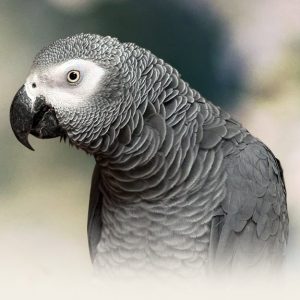
AFRICAN GREY PARROT

                 "AFRICAN GREY PARROT" 

The African dark parrot's capacity to talk and copy sounds makes this medium-sized parrot a dazzling friend. African dark proprietors frequently report that their grays customarily talk in setting and appear to be exceptionally receptive to their kin's feelings. The African dim parrot isn't only a top talker - this bird is likewise known for its outrageous knowledge, which gives them the moniker "The Einsteins of the Bird World."

African Grey parrot

(i)Shading


Dark

(ii)SIZE


medium

(iii)Life expectancy


30 + years

(iv)SOUNDS


Vocal communicator

(v)Cooperation


Exceptionally friendly

The African dim parrot is one of the most gifted talking/copying birds in the world, giving it truly a standing among bird fans. Not exclusively bird guardians love this savvy bird, it's quite possibly the most unmistakable specie to bird beginners also - everybody knows the African dark parrot. This parrot is one of the most established psitticine species kept by people, with records of the bird tracing all the way back to scriptural occasions. Downplayed excellence and a smart straightforward demeanor keep this parrot at the pinnacle of ubiquity.


From the outset, the African dim is a medium-sized, dusty-looking dim bird, nearly pigeon-like - yet further examination uncovers a radiant red tail, shrewd orange eyes, and a dazzling scalloped example to its plumage.

1-NATIVE REGION / NATURAL HABITAT.

African dim parrots for the most part occupy savannas, beach front mangroves, forest and edges of timberland clearings in their West and Central Africa range. However the bigger of the African dark subspecies is alluded to as the Congo African dim, this bird really has a lot more extensive normal reach in Africa, including the southeastern Ivory Coast, Kenya, and Tanzania. The Timneh African dim is found in a more modest area along the western edge of the Ivory Coast and through southern Guinea. Their eating routine in the wild comprises for the most part of palm nuts, seeds, natural products, and verdant matter.

2-CARE & FEEDING.

There's a motivation behind why the African dark is frequently viewed as the banner bird for parrot insight - not exclusively is this bird leaned to gather a huge jargon, African grays likewise show an inclination for perceiving the importance of words and expressions.


African grays need a lot of toys that challenge their insight, for example, searching and puzzle toys. Nutri-Berries by Lafeber Company are ideally suited for searching. This total food mixes an equilibrium of grains, seeds, and different supplements looking like a berry. Since the grains and seeds are generally entire and framed into a berry shape, it urges African grays to hold, snack, and even play with the Nutri-Berries. This emulates the scavenging that African grays do in nature.


African grays appear to be particularly impacted by pressure and disturbance in their current circumstance and can be reassured more by setting one corner of the enclosure against a divider rather than in a room.


African dim parrots are more inclined to lack in vitamin-A/beta-carotene, and along these lines benefit from eating vegetables high in beta-carotene, like cooked yam and new kale. Vitamin-D inadequacy is another worry, particularly for grays on a horrible eating routine. Offering a reasonable, pelleted diet, like Nutri-Berries, for the fundamental eating routine of an African dim forestalls nutrient and mineral insufficiencies. A dark that devours a pelleted diet for the most part needn't bother with nutrient enhancements added to its food.

3-PERSONALITY & BEHAVIOR.

Most bird managers accept that main an accomplished bird aficionado should keep a dark. They are mind boggling parrots, profoundly delicate, and all around requesting. They are additionally beguiling and splendid, however this match of awareness and cerebrums can prompt social issues. They are predictable animals, and surprisingly a little change in routine can make a delicate dark miserable. They are inclined to culling and biting their plumes, among other unfortunate quirks. Narratively, the TAG has a hardier disposition and might be better for families with a many individuals traveling every which way. The CAG favors somewhat less disarray.


African grays are social parrots that need a ton of involved time, notwithstanding, they aren't "cuddlebugs." They will endure some head scratching and a tad of petting, yet they don't see the value in extraordinary actual contact, however a few people wouldn't fret a little cuddling. Each bird has individual preferences and inclinations. A dim can likewise turn into a "one individual bird," regardless of whether each individual from the family associates with it all along.

4-SPEECH & SOUND.

A large part of the dark's allure comes from its talking capacity. It is among the best talkers in the parrot family, ready to rehash words and expressions in the wake of hearing them only a single time or two times. This bird arrives at full talking capacity around an extended time old enough, and most people become fit mirrors significantly sooner.


Not exclusively will a dim foster a remarkable jargon, research has shown that this species can come to get what it's talking about. The most well known CAG, Alex, and his associate, Dr. Irene Pepperberg, might be the justification for the notoriety of this species, and unquestionably for its prominent. Alex and Dr. Pepperberg cooperated for quite some time at Brandeis University until his appalling passing in 2007, because of a devastating occasion related to arteriosclerosis ("solidifying of the supply routes"). In their thirty years of exploration, Dr. Pepperberg encouraged Alex to perceive and recognize items, shadings, and shapes. Alex could likewise comprehend the ideas of same and unique, class, and could even count objects. However Alex was en route to considerably more perplexing manners of thinking, including how to peruse, his kindred African grays Griffin and Arthur (AKA "Mole") are proceeding to work with Dr. Pepperberg attempting to arrive at the point that Alex had reached and surprisingly further.


In any case, since grays are savvy and may decide to talk instead of shouting, it's a mix-up to accept that they aren't loud. They aren't quite so clearly or constant as a portion of the South American species, however they will learn family sounds and use them indefatigably to the consternation of gatekeepers. Envision the microwave signaling perpetually, or a cellphone ringing frantically without the advantage of switching it off.

5-HEALTH & COMMON CONDITIONS.

African grays are particularly vulnerable to feather picking, calcium inadequacy, vitamin-An and vitamin-D lack, respiratory contamination, psittacosis and psittacine bill and quill infection (PBFD).

Wednesday, January 19, 2022

GREEN CHEEKED CONURE

                         "GREEN CHEEKED CONURE"

Green-cheeked conures can be active and clever, yet they can likewise be a little shyer than other conures. These birds love their play and will see the value in a decent turn of toys and an open enclosure to go around.


(i)Shading


Dim, Green

(ii)SIZE


little

(iii)Life expectancy


As long as 20 years

(iv)SOUNDS


Vocal communicator

(v)Communication


Profoundly friendly


The Green-cheeked conure is a top choice among bird tenderfoots due to its moderately low value, little height, demeanor, and generally low commotion level, basically contrasted with its bigger cousins. The green-cheeked conure breeds decently effectively and subsequently is promptly accessible. The Green-cheeked conure is one of the littlest conures and is regularly mistaken for the maroon-bellied conure (Pyrrhura frontalis), a direct relation. These birds are so comparable in appearance that they are regularly distinguished inaccurately by pet stores or even their proprietors. They are a similar size, around 10 inches long, and both are fundamentally green. The green-cheeked conure is a piece more splendid in shading than the maroon-bellied conure and has dim excepting on its chest, blurring into a somewhat rosy gut. The maroon stomach has a brilliant notwithstanding on its chest and unmistakable, heart-formed maroon concealing on its tummy - thus the name. Both have a dull dark nose and feet. They are most effortlessly befuddled when they are youthful, before their full shading comes in after the main shed.

1-Native Region/Natural Habitat.

The green-cheeked conure is found in wild in Brazil, Bolivia, Argentina and Paraguay, where it occupies timberlands and forest regions.

2-Care & Feeding.

The amateur and the accomplished bird proprietor the same will partake in the green-cheeked conure as a pet. This bird may not be for the very novice, however somebody who has experience appropriately focusing on a parakeet or other little bird might be prepared for this accommodating bird. Green cheeks are not known to be nippy, and are especially tender. Since green-cheeked conures are exceptionally tender and love their proprietors strongly, they need a proprietor that can provide them with a lot of break of the enclosure. With some consideration consistently, even matched green cheeks will keep up with their pet quality. In the event that you don't have another green cheek, you can combine this bird with a maroon-bellied conure, yet don't permit them to raise. The green-cheeked conure will commonly live calmly with conures of comparative size, however won't promptly endure more modest birds, and may be in peril from the hostility of a bigger bird.


A green-cheeked conure ought to be offered a healthfully adjusted produced diet, enhanced with new vegetables, products of the soil table food varieties. Conures have occupied mouths, which makes Lafeber food varieties a conure top choice. Lafeber's Avi-Cakes, Pellet-Berries and Nutri-Berries offer adjusted sustenance that requests to a conure's biting necessities. A green-cheeked conure can satisfy 25 years or more with legitimate consideration.

3-Personality & behavior

The green-cheeked conure is a little jokester, full all the time of tricks. These birds love to hang topsy turvy and racket along the enclosure bars, trusting that their proprietors will play with them. Green cheeks are agitators, so watch out for your bird consistently. This is a decent bird for kids, as it is little enough for little hands to deal with and is by and large agreeable. Notwithstanding, understand that any bird can nibble, and little fingers are delicate. Continuously use alert around birds and kids, particularly for the wellbeing of the bird.

4-Health & Common Conditions.

Conures, including green-cheeked conures can be inclined to feather picking. Assuming a total clinical test precludes clinical reasons for feather culling, fatigue and additionally absence of proper mental excitement can be a reason. Offer your green-cheeked conure an enhanced climate with a lot of chances for play and rummaging, just as a staple stock of safe things to bite. Conures are likewise defenseless to Proventricular Dilatation Disease (PDD), Psittacine Beak and Feather Disease, Psittacosis, snout malocclusion and Aspergillosis. Customary wellbeing tests by an avian veterinarian are urgent to your conure's wellbeing, as they can help analyze and treat numerous sickness processes almost immediately.

5-Speech & Sound.

Proprietors love the green cheek for its overall quietness contrasted with other conures. It isn't as clearly or as incessant in its calling, yet it will make some clamor. Green-cheeked conures have been known to talk, and some can advance many words, however they are for the most part not valued for their talking capacities.


Thursday, January 13, 2022

COCKATIEL BIRD

             💥  "COCKATIEL BIRD"


1-NATIVE REGION / NATIVE HABITAT.

Cockatiels are local to the semi-parched areas of Australia. This open climate may be a justification for why cockatiels don't have the ear-penetrating shriek of parrots starting from thick tropical jungle natural surroundings. Wild cockatiels fly to the ground to search for food. Cockatiels promptly breed in the wild, and they are likewise simple to raise in bondage, which makes them generally accessible as pets at a lower cost than most other parrot species. Wild cockatiels are on alert 100% of the time for hunters and are light sleepers. A pet cockatiel may have a periodic night-dismay episode, where it flails wildly the enclosure around evening time as though surprised. You can help your cockatiel track down its direction back to its roost by leaving a night light on in its room.

2-CARE & FEEDIN.

A cockatiel needs an enclosure sufficiently extensive to oblige numerous roosts, toys, food bowls and have a lot of space to fold its wings without hitting them against anything. An enclosure with an enormous entryway front is ideal since it makes it more straightforward to return a cockatiel to its enclosure, particularly since cockatiels can be whimsical birds. Cockatiels are regular ground foragers and will scavenge on the lower part of the enclosure whenever offered the chance; cover the enclosure floor with paper and sprinkle disintegrated treats or millet sprinkle seed for your cockatiel to find. Cockatiels are social birds and flourish whenever given chances to associate with you, regardless of whether it is tenderly petting their cheek feathers, being conversed with or just being in a similar room as you.


A solid cockatiel diet incorporates financially adjusted eating regimens, like Lafeber Premium Daily Diet Pellets, just as other food, new vegetables and some seed. An all around focused on cockatiel can live for over 20 years.

3-COCKATIEL LOVE TO EAT.


4-Lafeber nourishment for Cockatiels.

 Exemplary Avi-Cakes for Small Birds

 Radiant Orchard Nutri-Berries for Small Birds

 Premium Daily Diet for Cockatiels

5-PERSONALITY & BEHAVIOR.

The place of a cockatiel's peak plumes can let you know its mind-set. Straight-up peak plumes can mean the bird is alarmed or profoundly inquisitive. A guarded cockatiel will hold its peak feathers straightened close its head, and it very well may be particularly anxious in the event that it additionally murmurs. A casual cockatiel will have marginally kept down peak feathers, just as lightened cheek quills and you would likewise hear it happily crushing its bill.


Toys intended to be annihilated by little noses are ideally suited for cockatiels and incorporate bits of paper, cardboard of delicate wood or non-harmful rawhide to bite up. Cockatiels additionally like toys with hard-plastic components, for example, dabs to tinker with. Male cockatiels frequently search out mirrors and other intelligent things to whistle to. A cockatiel may be leaned to fly down from its enclosure or playgym onto the floor, so be additional mindful at whatever point your bird is out of the enclosure so you don't step aerobics it and that different pets, like felines or canines, can't get to it. A female cockatiel may search out a dim, encased region to settle in, such the side of a bureau or behind furnishings (regardless of whether there is no male cockatiel present), so keep these regions forbidden. Cockatiels can be educated to whistle back to you on sign yet for the most part aren't known for their prepared stunts.

6-SPEECH & SOUND.

Cockatiels are more disposed to whistle than talk. Male cockatiels are bound to talk than females, and some can figure out how to express a couple of words or expressions. Cockatiels will generally trill instead of shrieking, and their somewhat lower commotion volume makes them a decent condo pet. Your cockatiel may tweet a contact call assuming you pass on the room trying to stay in touch with you.


It is typical for a cockatiel to wheeze a couple of times each day to get out residue or dander from its nares, which may be joined by a reasonable release. In the event that the wheezing is constant as well as the release is definitely not an unmistakable shading, contact your avian veterinarian. Cockatiels are astounding fliers and need more successive wing cutting than other parrot species since they are equipped for flying not long in the wake of having their plumes managed. Cockatiels (shed old plumes and start developing new) several times each year.

7-HEALTH & COMMON CONDITIONS.

A fundamental wellbeing worry for female cockatiels is constant egg-laying, which can drain her assemblage of imperative minerals and calcium, just as egg restricting, in which the hen can't pass an egg. (A hen needn't bother with a male cockatiel present to create an egg; it will simply be a barren egg.) Female cockatiels, along these lines, regularly need extra-calcium in their eating regimen, for example, a calcium-braced base eating routine or an enhancement like cuttlebone. Since cockatiels are frequently taken care of a generally seed diet, many experience the ill effects of lack of healthy sustenance and nutrient and mineral insufficiencies. An all-seed diet is likewise high in fat, which can prompt greasy liver infection. A sound, low-fat eating routine with the right equilibrium of nutrient, minerals and amino acids can go far in forestalling sickness in your cockatiel. The Lafeber Company offers many eating regimens, including, Premium Daily Diet Pellets and Classic Nutri-Berries that are exceptionally figured out to meet your cockatiel's dietary necessities.


Tuesday, January 11, 2022

LABRADOR DOGS

                                         "LABRADOR DOG"

1-ABOUT THE BREED

The sweet-colored, adorable Labrador Retriever is America's most famous canine variety. Labs are well disposed, active, and cheerful friends who have a very sizable amount of warmth to go around for a family searching for a medium-to-enormous canine. The tough, even Labrador Retriever can, contingent upon the sex, remain from 21.5 to 24.5 crawls at the shoulder and weigh between 55 to 80 pounds. The thick, hard coat comes in yellow, dark, and a delicious chocolate. The head is wide, the eyes gleam with benevolence, and the thick, tightening 'otter tail' is by all accounts perpetually flagging the variety's intrinsic excitement. Labs are broadly amicable. They are helpful housemates who bond with the entire family, and they mingle well with neighbor canines and people the same. In any case, don't confuse his nice character with low energy: The Lab is an energetic competitor that requires heaps of activity, such as swimming and long distance race rounds of get, to keep truly and intellectually fit

2-NATIONAL BREED CLUB & RESCUE

Need to associate with others who cherish a similar variety however much you do? We have a lot of chances to engage in your neighborhood local area because of AKC Breed Clubs situated in each state and in excess of 450 AKC Rescue Network bunches the nation over. Set up in 1931, The Labrador Retriever Club, Inc. is the authority AKC Parent Club for the Lab.

3-HEALTH

Labs are sound canines generally speaking, and a capable reproducer evaluates rearing stock for conditions, for example, elbow and hip dysplasia, heart problems, inherited myopathy (muscle shortcoming), and eye conditions, including moderate retinal decay. A condition called practice instigated breakdown (EIC) can happen in a few youthful grown-up Labs; a DNA test permits raisers to recognize transporters and plan breedings to try not to create the infection. Like other enormous, profound chested canines, Labs can foster a hazardous stomach condition called bulge. Proprietors ought to teach themselves about the manifestations that demonstrate this is happening, and what to do assuming this is the case.


Suggested Health Tests From the National Breed Club:

Hip Evaluation

Elbow Evaluation

Ophthalmologist Evaluation

EIC DNA Test

4-GROOMING

The Lab has a thick, water-repellant twofold coat that sheds. Give infrequent showers to keep them clean. Likewise with all varieties, the Lab's nails ought to be managed consistently and his teeth cleaned often.

5-EXERCISE

The Labrador Retriever is an abundant, exceptionally enthusiastic variety that necessities heaps of activity consistently. A Lab who doesn't get sufficient exercise is probably going to take part in hyperactive and additionally damaging conduct to deliver repressed energy. The variety's beloved exercises are recovering and swimming. Labs likewise love to consume energy on hunting trips or at field preliminaries, just as by taking an interest in canine games like dexterity, dutifulness, following, and dock plunging. Numerous Labs likewise buckle down in significant jobs like inquiry and-salvage, medication and bomb location, and as administration and help canines.

6-TRAINING

With the Lab's actual strength and high energy level, early socialization and doggy instructional courses are crucial. Tenderly presenting the pup to a wide assortment of individuals, spots, and circumstances between the ages of 7 weeks and 4 months and starting acquiescence preparing almost immediately will assist him with forming into a balanced, polite grown-up. Little dog instructional courses fill in as a feature of the socialization interaction and assist the proprietor with learning perceive and address any negative quirks that might be creating. Labs are committed, canny, and excited associates who should be remembered for family exercises.

7-NUTRITION

The Labrador Retriever ought to excel on a top notch canine food, regardless of whether financially fabricated or home-ready with your veterinarian's management and endorsement. Any eating regimen ought to be suitable to the canine's age (doggy, grown-up, or senior). A few canines are inclined to getting overweight, so watch your canine's calorie utilization and weight level. Treats can be a significant guide in preparing, however giving too many can cause heftiness. Find out with regards to which human food varieties are alright for canines, and which are not. Check with your vet on the off chance that you have any worries about your canine's weight or diet. Perfect, new water ought to be accessible consistently.

8-HERE SOME PICS


Monday, January 10, 2022

PERSIAN CAT

                                                    "PERSIAN CAT"

1-INTRODUCTION

The Persian feline (Persian: گربه پارسی, Gorbe'- ye Pârsi) is a long-haired variety of feline described by its round face and short gag. It is otherwise called the "Persian Longhair" in English-talking nations. The originally recorded predecessors of Persian felines were brought into Italy from Persia around 1620.[1][2] Recognized by the feline extravagant since the late nineteenth century, Persian felines were first embraced by the English, and afterward chiefly by American raisers after the Second World War. A few feline fancier associations' variety principles subsume the Himalayan and Exotic Shorthair as variations of this variety, while others treat them as independent varieties.


The particular rearing completed by raisers has permitted the improvement of a wide assortment of coat tones, however has likewise prompted the production of progressively level confronted Persians. Leaned toward by fanciers, this head construction can carry with it various medical conditions. Similar to the case with the Siamese variety, there have been endeavors by certain raisers to save the more established sort of feline, the conventional variety, having a more articulated gag, which is more famous with the overall population. Inherited polycystic kidney infection is common in the variety, influencing close to a large portion of the populace in some countries.[3][4]

2-ORIGIN

In 2021, Persian felines were positioned as the fourth most famous feline variety on the planet as indicated by the Cat Fanciers' Association.[5]


It isn't clear when long-haired felines previously showed up, as there are no known long-haired examples of the African wildcat, the predecessor of the homegrown subspecies.


An Angora/Persian from The Royal Natural History (1894)

The previously archived progenitors of the Persian were imported from Khorasan, Persia, into Italy in 1620 by Pietro della Valle, and from Angora (presently Ankara), Ottoman Empire (Turkey), into France by Nicholas-Claude Fabri de Peiresc at around a similar time. The Khorasan felines (گربه خراسانی) were dark covered while those from Angora were white. From France, they before long arrived at Britain.[6]


Ongoing hereditary examination demonstrates that current day Persians are connected not to felines from the Near East but rather to felines from Western Europe. The specialists expressed, "Despite the fact that the early Persian feline might have indeed begun from Persia, the cutting edge Persian feline has lost its phylogeographical signature."[7]

3-POPULARITY

In 2008, the Persian was the most well known variety of family felines in the United States.[33] In the UK, enlistment numbers have dwindled since the mid 1990s and the Persian lost its best position to the British Shorthair in 2001. Starting at 2012, it was the sixth most well known variety, behind the British Shorthair, Ragdoll, Siamese, Maine Coon and Burmese.[34] In France, the Persian is the main variety whose enrollment declined somewhere in the range of 2003 and 2007, dropping by more than a quarter.[35]


The most shading well known assortments, as indicated by CFA enlistment information, are seal point, blue point, fire point and tortie point Himalayan, trailed by dark white, concealed silvers and calico.[33]

4-CHARACTERISTICS

A show-style Persian has a very long and thick coat, short legs, a wide head with the ears set far separated, huge eyes, and an amazingly abbreviated gag. The variety was initially settled with a short gag, however over the long run, this trademark has become amazingly overstated, especially in North America. Persian felines can have practically any tone or markings.


The Persian is for the most part portrayed as a calm feline. Normally tranquil in nature, it adjusts very well to condo life. Himalayans will generally be more dynamic because of the impact of Siamese attributes. In a review contrasting feline proprietor impression of their felines, Persians appraised higher than non-family felines on closeness and love to proprietors, benevolence towards outsiders, tidiness, consistency, vocalization, and particularity over food.[43]

5-HEALTH

Pet protection information from Sweden puts the middle life expectancy of felines from the Persian gathering (Persians, Chinchilla, Himalayan and Exotic) at simply above 12.5 years, while most felines live until they are around 15 years of age. 76% of this gathering lived to 10 years or more and 52% lived to 12.5 years or more.[45] Veterinary facility information from England shows a normal life expectancy of 12–17 years, with a middle of 14.1.[46]


The advanced brachycephalic Persian has an enormous adjusted skull and abbreviated face and nose. This facial conformity makes the variety inclined to breathing challenges, skin and eye issues, and birthing troubles. Physical anomalies related with brachycephalic varieties can cause brevity of breath.[47] Malformed tear pipes cause epiphora, a flood of tears onto the face, which is normal yet essentially surface level. Entropion, the internal collapsing of the eyelids, makes the eyelashes rub against the cornea, and can prompt tearing, agony, contamination and cornea harm. Likewise, in upper eyelid trichiasis or nasal overlap trichiasis, eyelashes/hair from the eyelid and hair from the nose crease close to the eye fill in a manner which rubs against the cornea.[48] Dystocia, a strange or troublesome work, is somewhat normal in Persians.[49] Consequently, stillbirth rate is higher than ordinary, going from 16.1% to 22.1%, and one 1973 review puts cat death rate (counting stillborns) at 29.2%.[50] A veterinary report in 2010 archived the genuine medical issues brought about by the brachycephalic head.[51]


A 19.5 year old thoroughbred Calico Persian. Such life span is uncommon in this breed.[45]

As a result of the BBC program Pedigree Dogs Exposed, feline raisers have likewise gone under tension from veterinary and creature government assistance relationship, with the Persian singled out as one of the varieties generally impacted by wellbeing problems.[52] Animal government assistance defenders have recommended changes to raise norms to forestall infections brought about by finished or ultra-composing, and precluding the reproducing of creatures outside the put limits.[53] Aside from the GCCF standard that limits high noses, TICA[14] and FIFe principles expect nostrils to be open, with FIFe expressing that nostrils ought to permit "free and simple section of air." Germany's Animal Welfare Act also forbids the rearing of brachycephalic felines wherein the tip of the nose is higher than the lower eyelids.[51]


Polycystic kidney sickness (PKD) which causes kidney disappointment in impacted grown-up felines has a frequency pace of 36–49% in the Persian breed.[54] The variety – and determined ones, similar to the British Longhair and Himalayan – are particularly inclined to autosomal prevailing polycystic kidney infection (ADPKD).[55] Cysts create and fill in the kidney over the long run, supplanting kidney tissues and expanding the kidney. Kidney disappointment grows sometime down the road, at a normal age of 7 years of age (going from 3 to 10 years of age). Indications incorporate exorbitant drinking and pee, diminished craving, weight reduction and depression.[56] The illness is autosomal prevailing and DNA screening is the favored strategy for dispensing with the quality in the variety. As a result of DNA testing, most capable Persian reproducers currently have felines that don't really convey the PKD quality, consequently their posterity likewise don't have the quality. Before DNA screening was accessible, ultrasound was finished. In any case, a ultrasound is just however great as the day that it seems to be done, and many felines that were believed all things considered, were truth be told, a transporter of the PKD quality. Just DNA screening and reproducing felines that are negative for the PKD quality will create cats that are likewise negative for the quality, adequately eliminating this quality from the rearing pool.[57]


Hypertrophic cardiomyopathy (HCM) is a typical coronary illness in all felines. It is possible inherited in the Persian. The infection causes thickening of the left heart chamber, which can, in certain cases, lead to abrupt passing. It will in general influence guys and mid-to old-matured people. Announced frequency rate in Persians is 6.5%.[58] Unlike PKD, which can be recognized even in exceptionally youthful felines, heart tests for HCM must be done routinely to successfully follow as well as eliminate impacted people and their posterity from the reproducing pool.[59]


Beginning stage moderate retinal decay is a degenerative eye sickness, with an autosomal passive method of legacy in the Persian.[60] Despite a conviction among certain reproducers that the illness is restricted to chocolate and Himalayan lines, there is no clear connection between coat tone in Persians and the advancement of PRA.[61] Basal-cell carcinoma is a skin disease which shows most usually as a development on the head, back or upper chest. While frequently harmless, uncommon instances of threat will in general happen in Persians.[62] Blue smoke Persians are inclined to Chédiak–Higashi condition. White felines, including white Persians, are inclined to deafness, particularly those with blue eyes.[63] Persians are more inclined to symptoms of ringworm drug Griseofulvin.[64]


As inside canines, hip dysplasia influences bigger varieties, like Maine Coons and Persians. In any case, the little size of felines implies that they tend not to be as impacted by the condition.[62] Persians are powerless to malocclusion (inaccurate chomp), which can influence their capacity to handle, hold and bite food.[62] Even without the condition, the level essence of the Persian can make getting food troublesome, to such an extent that uniquely molded kibble has been made by pet food organizations to oblige the Persian.[65]


Different conditions which the Persian is inclined to are recorded below:[66]


Dermatological – essential seborrhoea, idiopathic periocular crusting, dermatophytosis (ringworm),[67] Facial overlay pyoderma, idiopathic facial dermatitis (a.k.a. messy face disorder), different epitrichial sores (eyelids)

Visual – coloboma, lacrimal punctal aplasia, corneal sequestrum, innate waterfall

Urinary – calcium oxalate urolithiasis (cat lower urinary lot infection)

Regenerative – cryptorchidism

Gastrointestinal – intrinsic portosystemic shunt,[68] inborn polycystic liver illness (related with PKD)

Cardiovascular – peritoneopericardial diaphragmatic hernia

Immunological – foundational lupus erythematosus

Neurological – alpha-mannosidosis

Neoplastic – basal-cell carcinoma, sebaceous organ growths

Exorbitant tearing

Eye condition like cherry eye

Heat awareness

Inclination to ringworm, a parasitic disease

Albeit these medical problems are normal, numerous Persians don't display any of these issues.

6-HEALTH & ETHICS

Alongside Persian felines being known for their facial construction, they are profoundly discussed with regards to the morals of rearing specific disfigurements. Some Persian felines that fall under the extreme class might encounter brachycephaly, brachygnathia, nasolacrimal, and a lot more recorded in the connection. This raises many worries when reproducing for these particular characteristics. Brachycephalic Syndrome makes a profoundly sought-after trademark. It frames the feline's facial elements to be more amiable and remarkable with its large owl-like eyes and more unimposing in general looking face.


However these highlights might be "cuter", it brings about numerous medical problems because of its evil working nasolacrimal framework that makes tear development to stream down their appearances bringing about stains and dermatitis. Brachycephaly is likewise connected with a delicate and long sense of taste that discourages the upper aviation route making breathing more troublesome.


These issues are its dental and jaw deserts (brachygnathia), as their teeth can likewise fill ostensibly in unnatural positions, making it hard to eat and permitting a higher possibility of plaque arrangement gum disease.


These issues referenced influences the personal satisfaction of numerous Persian felines. It concerns individuals with the subject of assuming rearing for explicit highlights is moral or not, making these worries a lawful issue too.

7-GROOMING

Since Persian felines have long, thick hide that they can't successfully keep clean, they need ordinary preparing to forestall matting. To keep their hide in its best condition, they should be brushed often. An option is to shave the coat. Their eyes might require ordinary cleaning to forestall outside development and tear staining.[69]

Budgie Breeding

  "Budgie Breeding" Most budgie proprietors avoid becoming bird reproducers. Yet, there are still a lot of fans who like to add to...